

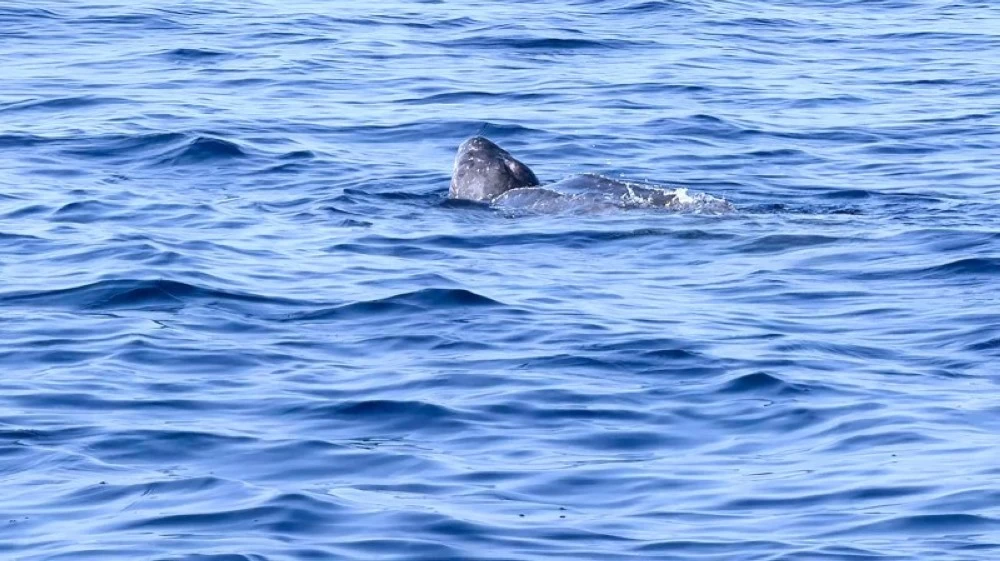
سجّل المركز الوطني لتنمية الحياة الفطرية رصداً نادراً لـ«سلحفاة جلدية الظهر» في البحر الأحمر، على بُعد 30 كيلومتراً من القنفذة، داخل نطاق محمية الثقوب الزرقاء البحرية التي أُعلنت أخيراً. ويُعد هذا الرصد من المشاهدات القليلة جداً لهذا النوع في البحر الأحمر.
تُعد «سلحفاة جلدية الظهر» أكبر سلاحف البحر في العالم؛ إذ يصل وزنها إلى نحو 900 كيلوغرام، وتمتاز بقدرتها على الغوص لأعماق تتجاوز 1,000 متر، وبجلدها الأسود القاسي ذي الملمس الجلدي و5 نتوءات طولية مميزة على ظهرها.
يشير المركز إلى أن هذا النوع يقطع آلاف الكيلومترات بحثاً عن الغذاء، خصوصاً قناديل البحر، وأن أقرب مناطق انتشاره تقع في جنوب أفريقيا وسريلانكا وجزر أندامان، على مسافات تراوح بين 5,000 و8,000 كيلومتر من البحر الأحمر. ولا تُسجّل له مواقع تعشيش داخل البحر الأحمر، ما يرجّح عبورها مضيق باب المندب في رحلة استثنائية.
ووفق تقييم القائمة الحمراء للاتحاد الدولي لحفظ الطبيعة، تُصنّف السلحفاة ضمن فئة «مهددة بالانقراض بشكل حرج» في المحيط الهندي، بينما تُدرج كـ«بيانات غير كافية» في البحر الأحمر والخليج العربي بسبب محدودية المعلومات.
The National Center for Wildlife Development recorded a rare sighting of a “Leatherback Turtle” in the Red Sea, 30 kilometers from Al-Qunfudhah, within the recently declared Blue Holes Marine Reserve. This sighting is one of the very few observations of this species in the Red Sea.
The “Leatherback Turtle” is the largest sea turtle in the world, weighing up to about 900 kilograms. It is distinguished by its ability to dive to depths exceeding 1,000 meters, its tough black skin with a leathery texture, and five distinctive longitudinal ridges on its back.
The center indicates that this species travels thousands of kilometers in search of food, particularly jellyfish, and that its closest distribution areas are in South Africa, Sri Lanka, and the Andaman Islands, at distances ranging from 5,000 to 8,000 kilometers from the Red Sea. There are no recorded nesting sites for it in the Red Sea, suggesting that it crosses the Bab el Mandeb Strait on an exceptional journey.
According to the IUCN Red List assessment, the turtle is classified as “Critically Endangered” in the Indian Ocean, while it is listed as “Data Deficient” in the Red Sea and the Arabian Gulf due to limited information.